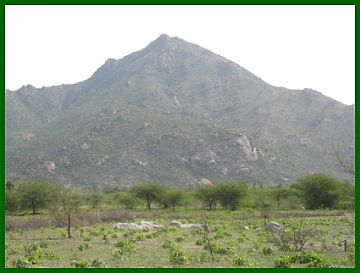
'I ordain that residence within a radius of three Yojanas of this Hill shall be itself suffice to burn off all defects and effect union with the Supreme.'
[Skanda Purana]
(Yojana is an ancient unit of measurement equivalent to about 16 kilometers)
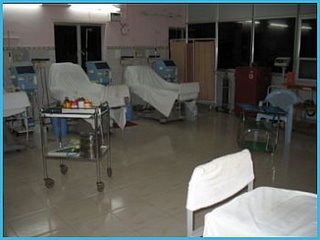
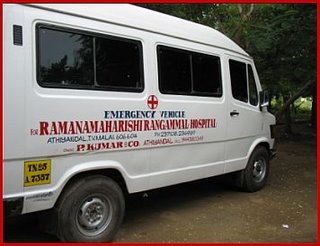
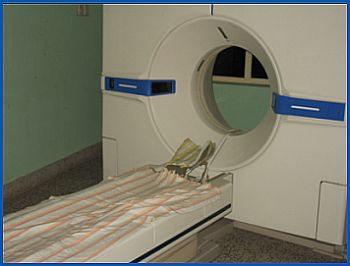
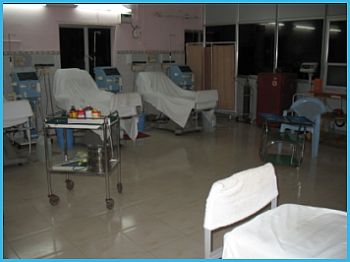
Rangammal Hospital is very well organised with a 200 bed capacity but in case of emergencies can accept 250 patients. The Hospital runs at 99% occupancy. Many out-patients also attend Rangammal and during the day the place is a hive of activity. The staff numbers 265. This is a picture of their CAT scan.
A very nice Hospital, kept impeccably clean and staffed by enthusiastic and friendly folk. A Hospital also that has won many awards in this country for their outstanding service and record.
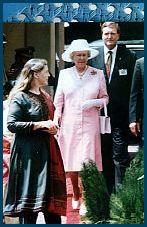
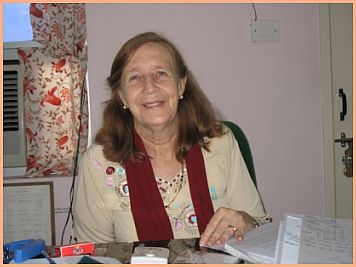
And now 25 years later and nearly 70 years old she remains completely committed to the Organisation she set up, The Rangammal Memorial Rehabilitation Society:


More than 50 child labourers from several tribal villages in Jawadu hills were rescued in Tiruvannamalai by the Terre Des Home Core Trust over this last week.
The children, mostly girls, were about to be sent to cotton fields near Attur in the Salem District. The children who are between the ages 10-14 were compelled to give up their school studies to work. All the rescued children have now been handed over to the Child Welfare Committee.
A spokesman for the Terre Des Home Core Trust has reported that a member of their Trust keeps watch at Tiruvannamalai Bus Stand for incidents of child trafficking and that local people, (including auto rickshaw drivers) have also been asked to be vigilant in reporting cases of the suspicious transit of young children from the Bus Stand. The spokesman for the Trust reports that it has been their increased vigilance in Tiruvannamalai that has exposed this child trafficking trade and have insisted that action be taken against the perpetrators.
The main reason for the exodus of children from hill villages is poverty. Previously there have been sporadic instances of child labourers being rescued. But what makes this trafficking of young children to the cotton fields more serious is the inherent dangers of working in such heavily contaminated areas. For more information here is an extract from a report entitled: "Children's development undermined by pesticide use in India":
'A unique study investigated the chronic impacts of pesticides on children in India.
In 2003, researchers with Greenpeace India tested almost 900 children living in cotton-growing areas in six States for their developmental abilities, using a range of tests designed to measure analytical abilities, motor skills, concentration and memory. They found that children living in regions in which pesticides are widely used performed significantly worse in these various developmental abilities than children in a control group living elsewhere.
The investigation reveals that children from regions as diverse as Tamil Nadu and Punjab, who have nothing in common but their exposure to pesticides, appear to share an inability to perform simple play-based exercises; such as catching a ball or assembling a jigsaw puzzle; simply because they have been exposed to pesticides over a period of time.
Cotton uses some of the most highly toxic pesticides, including significant levels of organophosphates, which affect the nervous system. The quantities of chemicals applied are massive: while cotton occupies less than 5% of cultivated land in India, it uses more than 50% of all agricultural pesticides. India is a major user of pesticides . . .'
To read the full report please check link:
http://www.pan-uk.org/pestnews/pn65/pn65p12.htm


The famous sacred sites anthropologist Martin Gray asserts that according to his studies, he had been led to identify 32 separate categories of power places according to the factors contributing to the presence of energy fields at those places. These categories include; sacred mountains, healing springs, ancient astronomical observatories etc.
But whatever the catgegory of the sacred site, it is the actual combination of different factors that catalyzes the psychological and physiological effects in humans.
These factors are the geophysical characteristics of the sacred site location, the visual beauty of the sacred site location and the location of sacred sites according to regional configurations of sacred geography.


A beautiful photograph to enjoy of the Arunchaleswarar Temple in the foreground and the Hill of Arunachala at the back. You can notice from this photograph how the architects from ancient times, perfectly aligned the Temple at the southeast slope of the Hill.